

How to save on fuel and pay less for car insurance
31.03.2026
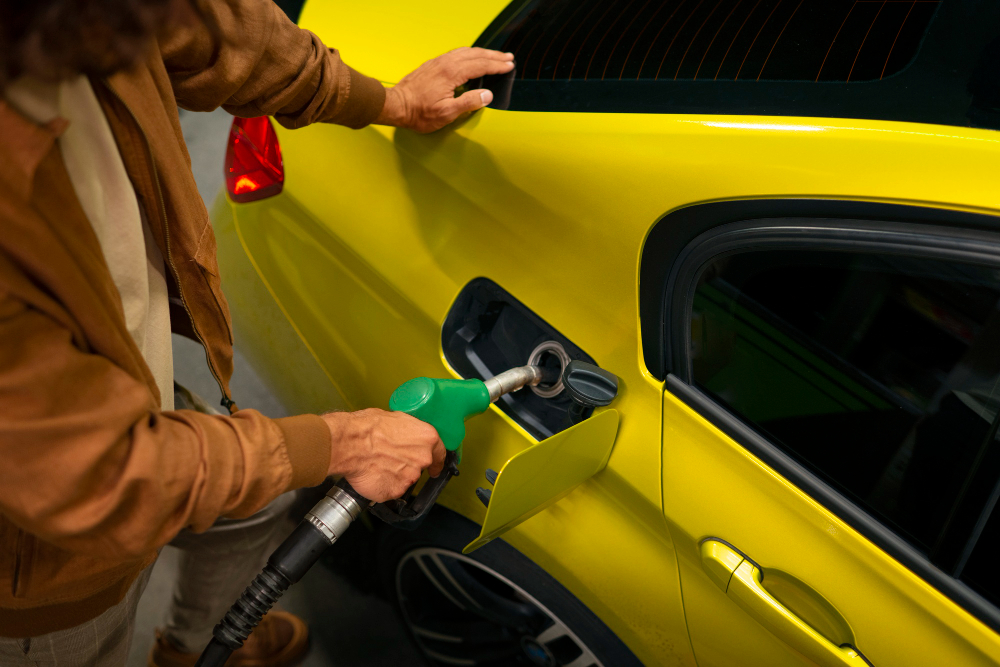
This spring, the prices on petrol station signs are a source of frustration for every driver. But we still have to drive! Fortunately, there are entirely realistic and practical ways to reduce fuel consumption by a significant 10–25%. Changing your driving style not only saves money but also has a direct impact on your safety and even the cost of your insurance. Let’s take a look at how this works.
But first, let’s take a look at your wallet – how much you can save with current offers. Until 1 May 2026, the ‘National Cashback’ programme for fuel is in effect in Ukraine. If you fill up at petrol stations participating in the programme and pay with a ‘National Cashback’ card, you’ll receive 15% cashback on diesel, 10% on petrol and 5% on LPG. The state can reimburse up to 1,000 UAH per month. At the same time, all the usual discounts and bonuses from petrol station chains continue to apply. Why not take advantage of this opportunity?
Technical check-up: checking the condition of your car
Now let’s carry out a quick technical check-up on the car, as many people don’t even realise how minor technical issues can quietly drain the fuel tank. Let’s start with the tyres. Checking tyre pressure takes literally five minutes, but tyres that are under-inflated by as little as 20% automatically add 3% to your standard fuel consumption. And if the pressure drops by just 0.5 atmospheres, you’re already paying an extra 5%. A very important point: you should only check the pressure on cold tyres.
The choice of summer tyres also plays a role. Class ‘A’ tyres can save up to 0.5 litres per 100 km compared to class ‘G’. Also consider the tyre width: switching to a wider profile (for example, from 205 mm to 225 mm) creates greater rolling resistance and adds an extra 0.3–0.5 litres per 100 km.
Another enemy of fuel economy is a dirty fuel system. Flushing the system every 20–40,000 km will help the engine run smoothly. Don’t forget about physics either. Every additional 50 kg of load causes the car to consume 0.3–0.5 litres more per 100 km. The same applies to aerodynamics: if you have an empty roof box fitted, remove it, as it creates additional drag.
Eco-driving: improving your driving style
And now for the main concept of economy – eco-driving. This is a driving style aimed at saving fuel, reducing harmful emissions and improving safety, but without noticeably slowing down your journeys. Research shows that sudden starts and aggressive braking increase the engine’s ‘appetite’. Conversely, smooth driving without unnecessary jerks significantly reduces fuel consumption. It’s not about driving slowly and annoying the whole traffic flow, but about a sensible approach to driving.
Pay particular attention to how you accelerate. In city traffic, acceleration accounts for up to 59% of driving time and consumes up to 40% of fuel. There is a golden rule here: try to shift to a higher gear when reaching 2,500 rpm, and open the throttle by 30–40%. If you manage to do this regularly, you’ll achieve fuel savings of up to 10%.
Also, break the habit of letting the engine warm up for a long time while stationary (especially as it’s no longer winter). Modern engines warm up much faster whilst actually driving, and a long wait is a waste of fuel. Also, bear in mind the air conditioning: when it’s running, it can consume up to 1 litre per 100 km. So, only use the climate control when necessary.
How driving style relates to insurance
And now for the most interesting part: how is eco-driving linked to insurance? A study conducted in Poland found that drivers who follow the principles of economical and smooth driving are far less likely to make claims under car insurance (CASCO). A similar result was shown by a study by the Traffic Injury Research Foundation, involving over 2,700 Canadian drivers: economical driving with smooth acceleration reduced the risk of accidents and the number of insurance claims.
The fact is that the cost of your comprehensive insurance policy is significantly influenced by your driving experience and whether or not you have had claims or accidents in the past. In other words, regular customers who avoid accidents thanks to economical driving can receive discounts from their insurer when calculating the cost of their policy. Conversely, if you have a history of numerous insurance claims, you may face a higher premium. It all adds up to very favourable figures. By switching to a calm, smooth driving style, you not only save between 10% and 25% of the money that used to go on fuel. You’ll also spare your nerves, and thanks to a lower accident rate, you’ll eventually get better insurance rates. Try implementing at least a few of these tips today. Your car, your wallet and your insurance company will definitely thank you for it!
Find out more about Euroins’ car insurance products: https://euroins.com.ua/en/kasko-produkti